
Puppy Growth Chart by Age and Size: What to Track
A useful puppy growth chart tracks a pattern, not one perfect weight. Weigh your puppy regularly, plot each result on the chart for the correct sex and expected adult size, and look for a steady path along a similar centile channel. A sharp rise or fall matters more than one isolated measurement.
What does a puppy growth chart actually tell you?
A puppy growth chart compares your dog's weight pattern with patterns recorded in healthy puppies of a similar sex and expected adult size. Researchers created separate standards because small dogs finish growing sooner, while large and giant dogs grow for longer. A single mixed chart would hide those differences (dog growth standards).
The curved lines are centile channels. They describe how weight commonly changes with age; they do not rank one puppy as better than another. A puppy can be healthy on a lower channel or a higher one. What you want is a reasonably smooth trajectory rather than repeated jumps across channels.
| What you see | What it may mean | What to do next |
|---|---|---|
| Smooth rise along one channel | Growth is following a consistent pattern | Keep the same routine and recheck |
| One unusual point | Scale, timing, hydration, or entry error | Repeat under similar conditions |
| Sustained climb across channels | Intake may be outpacing healthy growth | Check portions and body condition |
| Flat or falling trend | Intake, digestion, illness, or an incorrect record may be involved | Reweigh and contact your veterinarian if confirmed |
How should I measure puppy growth at home?
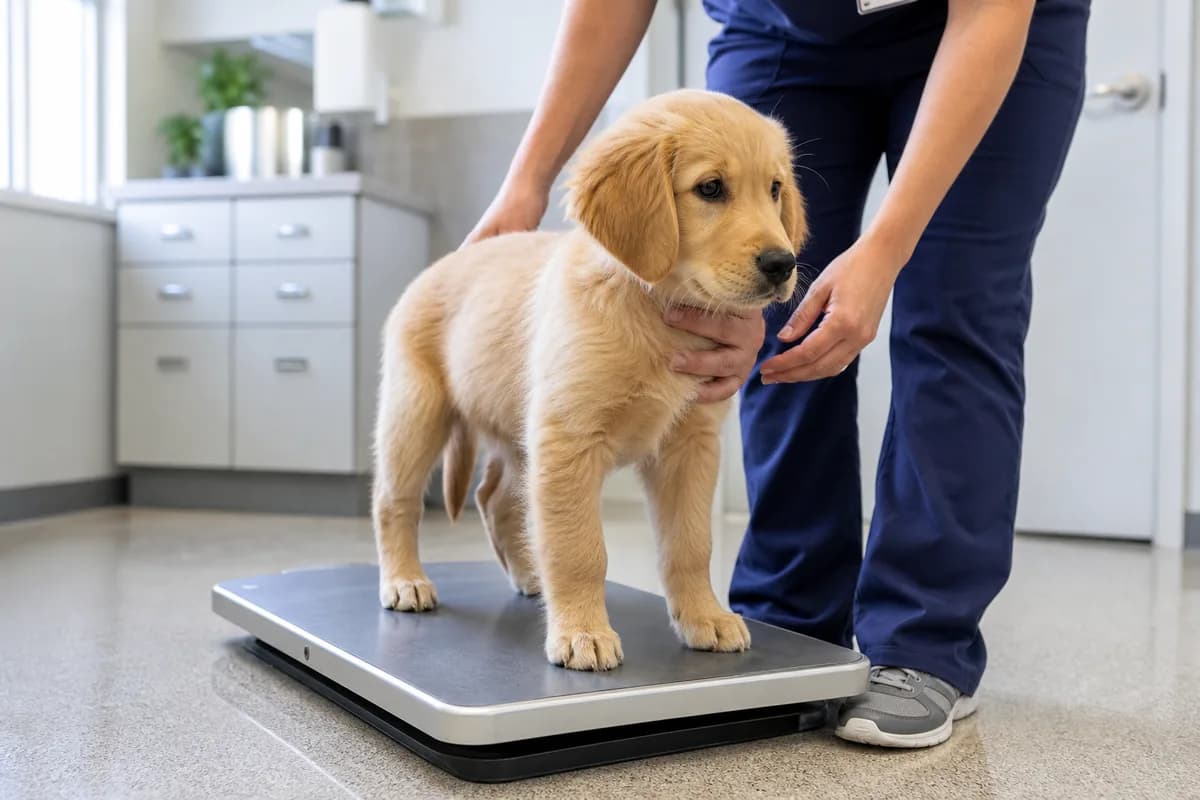
Use the same scale when possible. Weigh at a similar time of day and record the date, age, weight, food amount, and any major event such as illness or a food change. For a small puppy, weigh yourself holding the puppy and subtract your own weight; a pet or veterinary scale is more reliable as the dog grows.
During rapid growth, one measurement each week gives enough detail without turning normal daily fluctuation into noise. Once the curve slows, every two to four weeks is usually practical. Keep the raw measurements: a graph is only as useful as the dates and units behind it.
Why does body condition still matter?
Growth charts measure weight, not fat. Two puppies at the same age and weight can have different body composition. Feel the ribs, look for a waist from above, and check the abdominal tuck from the side. AAHA recommends following both weight and body condition through the dog's life, not treating either number in isolation (AAHA nutrition guidelines).
Research comparing growth records found that dogs in overweight body condition were more likely to cross upward through centile lines than healthy dogs. That makes upward channel crossing a useful prompt to reassess feeding, but it is not a diagnosis on its own (growth pattern comparison).
When should a changing curve concern me?
Repeat an unexpected measurement before reacting. If the change persists, review whether the food amount, treats, activity, stool, appetite, or scale changed. Call your veterinarian promptly when a stalled or falling curve comes with vomiting, diarrhea, poor appetite, lethargy, pain, or another sign that the puppy is unwell.
For routine monitoring, add each weigh-in to the PawAI Puppy Plan, then pair the curve with a hands-on condition check. You can also use our guide to weighing your dog consistently and review puppy feeding amounts by age.
Sources
Frequently asked questions
How often should I weigh my puppy?
Weekly weighing is useful during the fastest early growth, provided you use the same scale and similar conditions. As growth slows, every two to four weeks is usually enough unless your veterinarian recommends closer monitoring.
Should my puppy stay on the 50th percentile?
No. The 50th centile is not a goal or a grade. A healthy puppy may naturally track a lower or higher channel; the important signal is the shape of the puppy's own trend together with body condition.
Put this into practice
Check if your dog is overweight from a photo →Curious how the numbers work? See how we calculate.
This article is educational and is not veterinary advice. For a diagnosis or a treatment plan, consult a licensed veterinarian who can examine your pet.