
Dog Food Calorie Density Explained (kcal/kg vs cup)
Calorie density is how many calories a food packs per gram or per cup, usually shown as kcal per kilogram on the bag. It is why two foods fed by the same cup can differ by hundreds of calories. Feed by calories and grams, not cups, and use the kcal-per-kilogram figure to compare foods fairly.
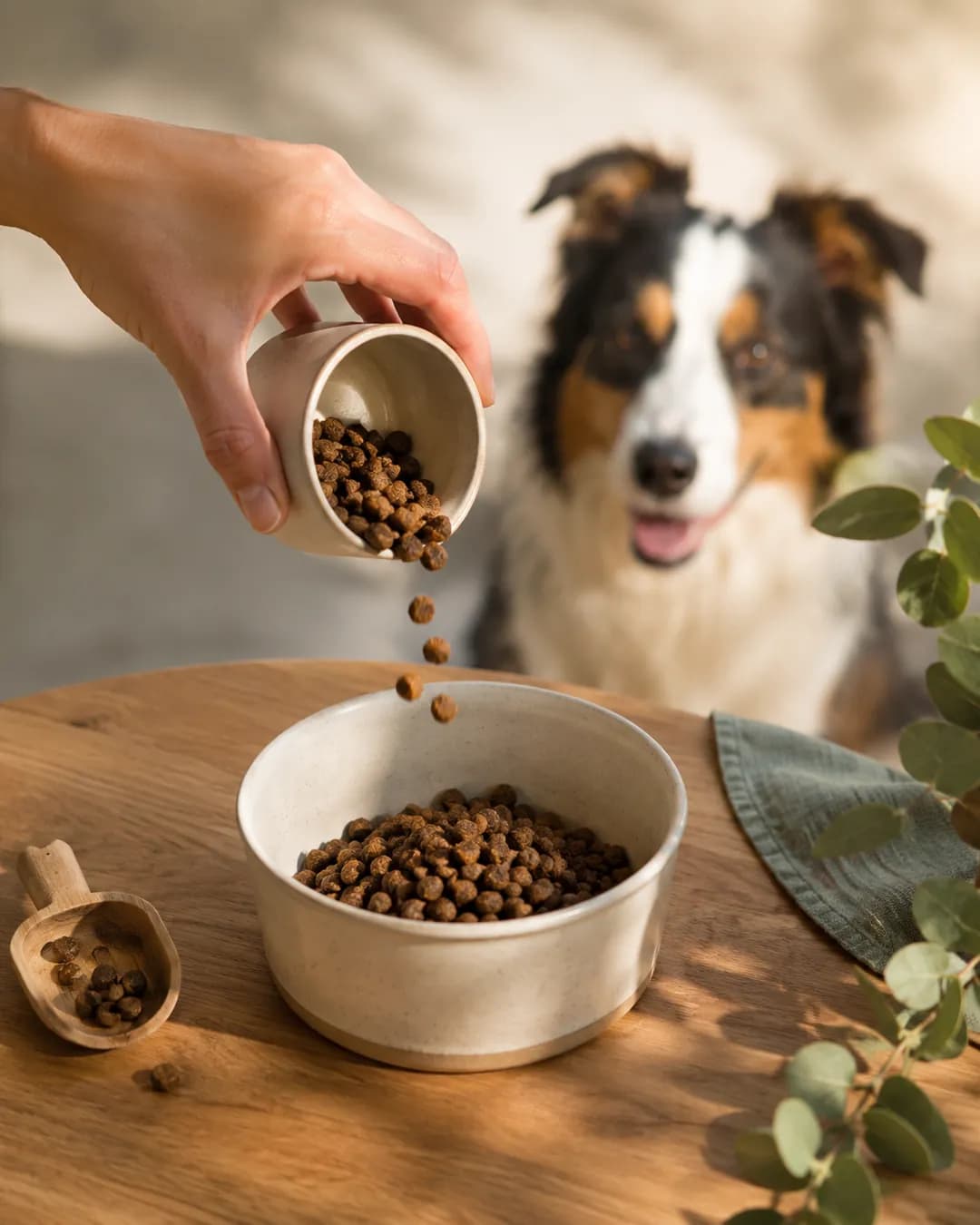
What is calorie density in dog food?
Calorie density is how much energy a food carries per unit — per gram, per kilogram, or per cup. On the bag it appears as a calorie content statement, typically kcal per kilogram and kcal per cup. Two foods can look identical in the bowl yet carry very different calories, because ingredients and fat content change how energy-dense the food is.
This is the hidden variable behind most feeding mistakes. A dense, high-fat kibble might pack 500+ kcal per cup, while a lighter formula holds closer to 300. Feed both "one cup" and you've under- or over-fed by nearly 40% without noticing.
Why does kcal/kg matter more than the cup?
Because the cup is a volume and calories are what count. Kibble pieces differ in size and density, so a measuring cup holds different weights — and therefore different calories — of different foods. The kcal/kg figure is density independent of scoop, which makes it the honest way to compare foods and the right basis for portioning by weight.
Getting this wrong is common and it drives failed diets. In one weight-loss study, 64.4% of dogs missed the recommended weekly loss rate, largely because owners fed more than intended (canine weight-loss review, PMC) — and cup-based feeding of a dense food is a classic way to do that accidentally.
| Food type | Typical calorie density | Practical implication |
|---|---|---|
| Dense/performance dry | ~450–550 kcal/cup | Small portions; easy to overfeed by cup |
| Standard adult dry | ~325–425 kcal/cup | Middle of the range |
| "Light"/weight-management dry | ~250–325 kcal/cup | Larger portion for same calories |
| Wet/canned | ~70–130 kcal per 100 g | Feed a much larger weight |
How do I feed by calorie density?
Three steps:
- Find your dog's daily calorie target. Estimate resting needs from ideal weight — RER = 70 × (kg)^0.75 — then apply a life-stage/activity factor (WSAVA energy chart).
- Read the food's kcal/kg from the calorie statement (required on complete dog foods).
- Convert to grams: grams per day = daily calorie target ÷ (kcal/kg ÷ 1000), then weigh that amount with a kitchen scale.
Weighing rather than scooping removes the density trap entirely, and it's the single most effective accuracy upgrade you can make. WSAVA's guidance to assess and feed to body condition assumes you actually know how much energy is going in (WSAVA Global Nutrition Guidelines).
Put the numbers to work
Let our dog calorie calculator turn your dog's ideal weight into a daily target, then convert it to grams of your specific food. To see why the cup fooled you in the first place, read how many calories are in a cup of dog food, and check how we calculate for the full method.
Sources
Frequently asked questions
What does kcal/kg mean on dog food?
It is the food's calorie density: kilocalories per kilogram of food. It lets you compare two foods fairly and convert a calorie target into a weight of food to serve.
Why is wet food so different from dry?
Wet food is mostly water, so its calorie density per gram is far lower than dry kibble. You feed a much larger weight of wet food for the same calories.
Put this into practice
Calculate your pet’s daily calories →Curious how the numbers work? See how we calculate.
This article is educational and is not veterinary advice. For a diagnosis or a treatment plan, consult a licensed veterinarian who can examine your pet.