
How to Stop Puppy Biting Without Punishment
Stop puppy biting by preventing over-aroused play, keeping suitable toys within reach, and calmly ending interaction for a few seconds when teeth touch skin or clothing. Resume with a toy and reward four paws on the floor or gentle play. Avoid yelling, muzzle grabbing, alpha rolls, and physical corrections; they can add fear without teaching the alternative behavior.
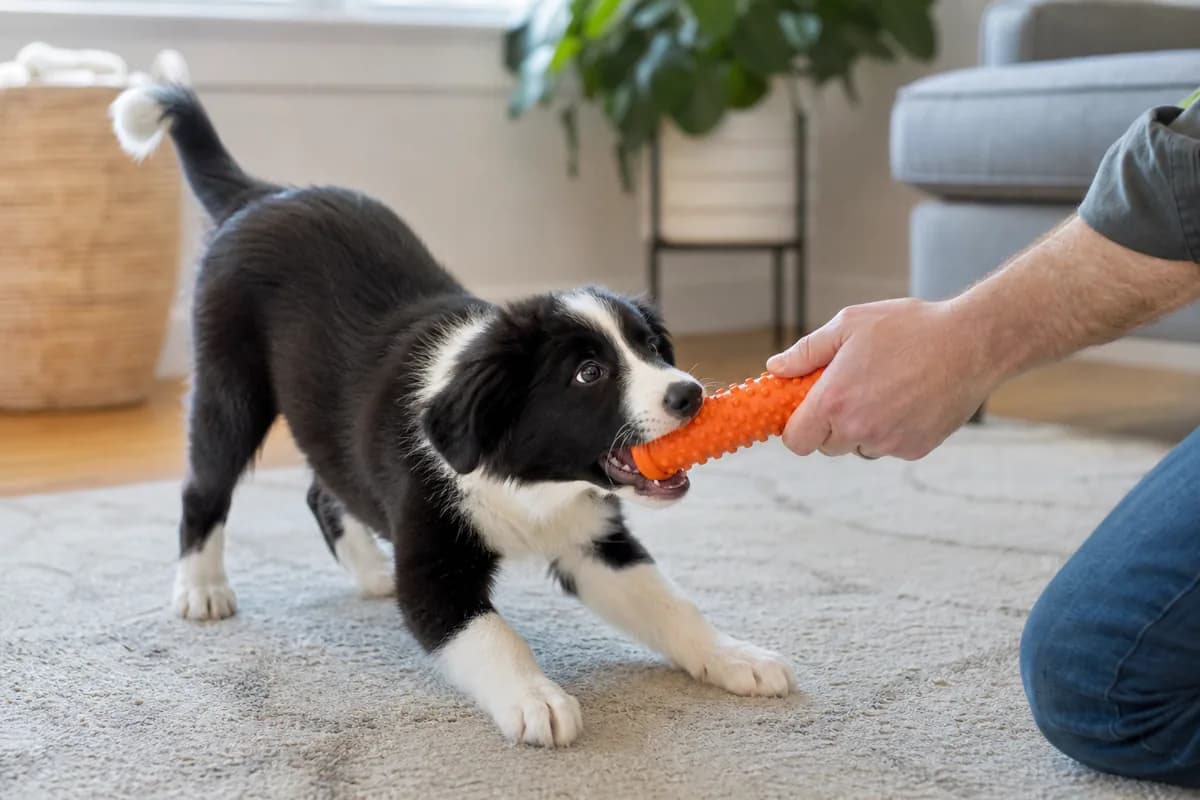
Why do puppies bite hands and clothes?
Puppies explore with their mouths, rehearse social play, and chew during teething. Mouthing often intensifies when a puppy is overtired, frustrated, hungry, or too excited to make a different choice. That means the solution begins before teeth land on skin.
AAHA includes learning appropriate mouth use among the central behavior tasks of puppyhood (AAHA puppy life stage).
What should I do in the moment?
- Become still. Pulling hands away quickly can turn clothing and fingers into a moving game.
- Pause access. Calmly step behind a gate or remove attention for a few seconds.
- Offer the right outlet. Resume with a toy long enough to keep teeth away from hands.
- Reward the alternative. Reinforce sitting, four paws down, carrying a toy, or gentle contact.
- End before the next spiral. If the puppy immediately returns harder, arrange a quiet toilet break and rest.
A pause is not frightening isolation. It is brief, predictable information that rough play makes the social game stop. Set up gates and toys in advance so the response does not depend on grabbing the puppy.
Which prevention changes work fastest?
| Common trigger | Set up the safer alternative |
|---|---|
| Overtired evening “shark” period | Schedule sleep and a quiet toilet break before arousal peaks |
| Hands or clothes moving quickly | Place a long tug toy within reach before play starts |
| Children running through the room | Use a gate and supervised parallel activity |
| Puppy seeking something to chew | Rotate appropriate chews and food toys |
| Play continuing past self-control | End the burst while the puppy can still respond to a familiar cue |
Why avoid punishment and aversive tools?
AVSAB recommends reward-based methods for dog training and advises against physical or psychological punishment (AVSAB position). Holding the muzzle shut, rolling a puppy, shouting, hitting, leash corrections, or spraying can suppress a warning or increase conflict without teaching what to put in the mouth instead.
Observed training-school research found more stress-related behavior and poorer welfare measures among dogs trained with aversive-based methods than among dogs in reward-based schools (companion-dog welfare study). That study involved older companion dogs as well as training contexts, so it does not quantify a puppy-biting treatment; it supports the broader reason to choose a lower-risk teaching method.
When does biting need individual help?
Contact your veterinarian or a credentialed reward-based behavior professional if the puppy freezes, guards items, bites around handling, breaks skin repeatedly, targets faces, cannot disengage, or lives with children who cannot follow the management plan. Pain and illness can change behavior, so a sudden increase also deserves a medical check.
Follow one short skill at a time in the PawAI Puppy Plan and keep training rewards inside the puppy treat calorie budget.
Sources
Frequently asked questions
Is puppy biting normal?
Mouthing is common during puppy play and exploration, especially when a puppy is tired, excited, or teething. Normal does not mean it should be ignored; consistent management and reinforcement teach safer ways to interact.
When is puppy biting more than normal play?
Seek professional help when bites are intense or unpredictable, the body becomes stiff, guarding or fear is involved, skin is repeatedly broken, children or vulnerable adults are at risk, or the behavior is worsening despite management.
Put this into practice
Check if your dog is overweight from a photo →Curious how the numbers work? See how we calculate.
This article is educational and is not veterinary advice. For a diagnosis or a treatment plan, consult a licensed veterinarian who can examine your pet.