
Puppy Treat Calories: How to Use the 10% Rule
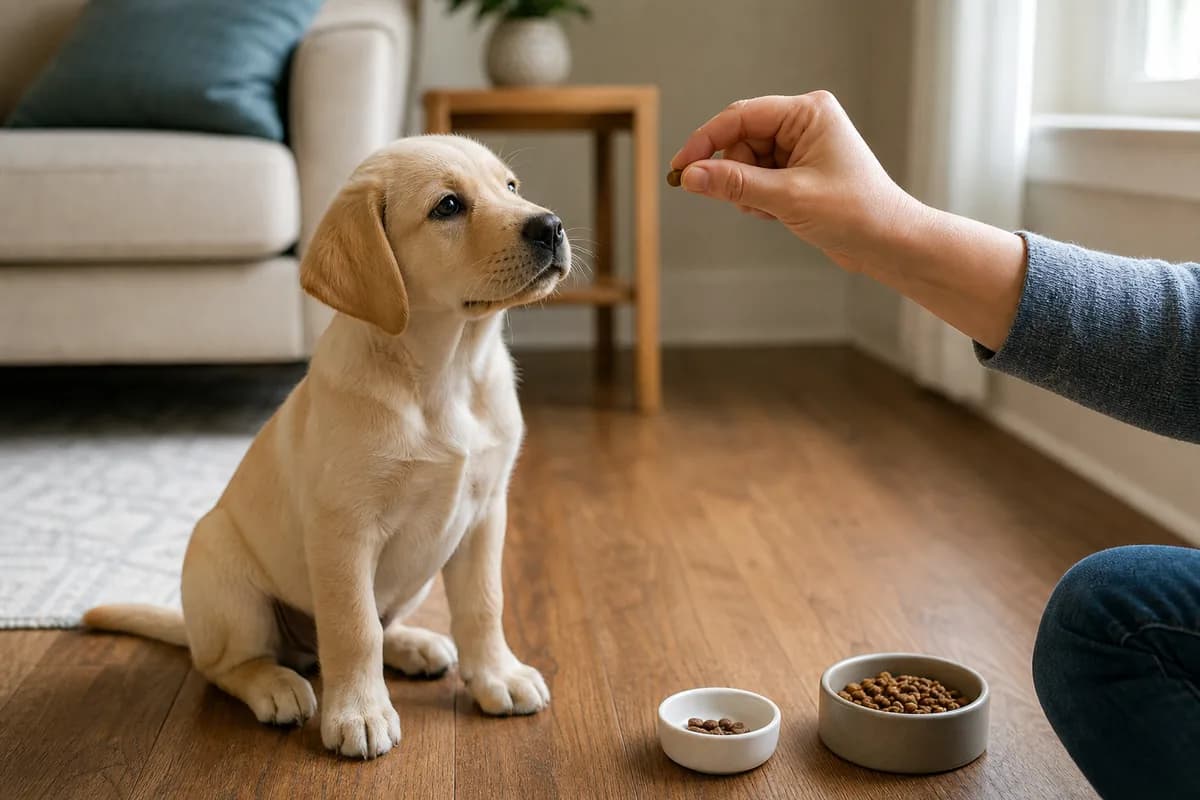
Keep treats below 10 percent of your puppy's daily calories, not 10 percent of the food's volume. If the daily target is 600 calories, treats should stay under 60 calories and at least 540 should come from complete and balanced puppy food. Tiny rewards or reserved kibble make frequent training easier to budget.
What is the 10 percent treat rule?
WSAVA recommends that treats provide less than 10% of a dog's daily calorie intake. The other 90% or more should come from a complete and balanced diet appropriate for the dog's life stage (WSAVA treat guide).
For a puppy, that balance matters because growth food supplies nutrients in carefully controlled proportions. Extra snacks can add energy without supplying the same complete nutrient package.
| Daily calorie target | Maximum from treats | Minimum from balanced puppy food |
|---|---|---|
| 300 kcal | Less than 30 kcal | At least 270 kcal |
| 500 kcal | Less than 50 kcal | At least 450 kcal |
| 600 kcal | Less than 60 kcal | At least 540 kcal |
| 800 kcal | Less than 80 kcal | At least 720 kcal |
| 1,000 kcal | Less than 100 kcal | At least 900 kcal |
These are examples, not calorie prescriptions. Your puppy's actual daily target depends on size, age, activity, growth, and body condition.
How do I count training treats without slowing training down?
Measure the entire day's food in the morning. Move a handful of kibble into a training container and reward from that reserve. For higher-value work, cut soft treats into pieces no larger than needed for the puppy to notice and swallow quickly.
Write down the calories per piece or per ounce once. If the package only lists calories per treat and you divide each treat into four, each piece has roughly a quarter of that value. Include food in stuffed toys and lick mats; changing the delivery method does not erase the calories.
AVSAB recommends reward-based training over aversive methods (AVSAB training statement). A calorie budget is not a reason to reward less often—it is a reason to make each reward smaller and use part of the regular ration.
Which extras are easiest to miss?
The budget includes:
- packaged training treats and dental chews;
- cheese, meat, peanut butter, and table scraps;
- food used in puzzle toys or on lick mats;
- edible chews and calorie-containing supplements;
- rewards given by children, visitors, walkers, and trainers.
Keep a small container for the day's extras so everyone can see what remains. If the container empties, use praise, play, access to sniffing, or reserved kibble rather than opening another bag.
What if my puppy is gaining too quickly?
Do not cut the complete growth diet sharply without checking the whole picture. First count every extra, confirm the measuring method, and assess body condition. AAHA recommends a nutritional assessment that considers the puppy, the diet, and feeding management together (AAHA nutrition guidelines).
Use the PawAI Puppy Plan to calculate the starting daily ration and record growth. Pair the treat budget with the puppy growth chart guide so the plan responds to the trend rather than a guess.
Sources
Frequently asked questions
Can I use puppy kibble as training treats?
Yes. Reserve part of the measured daily ration and deliver individual pieces during training. Kibble still counts toward the day's calories, but it does not displace the balanced diet the way additional treats can.
Do dental chews and table food count as treats?
Yes. Chews, table scraps, lick mats, food-stuffed toys, supplements with calories, and rewards from every family member all belong in the same daily extra-calorie budget.
Put this into practice
Calculate your pet’s daily calories →Curious how the numbers work? See how we calculate.
This article is educational and is not veterinary advice. For a diagnosis or a treatment plan, consult a licensed veterinarian who can examine your pet.