
How to Check Your Puppy's Body Condition Score
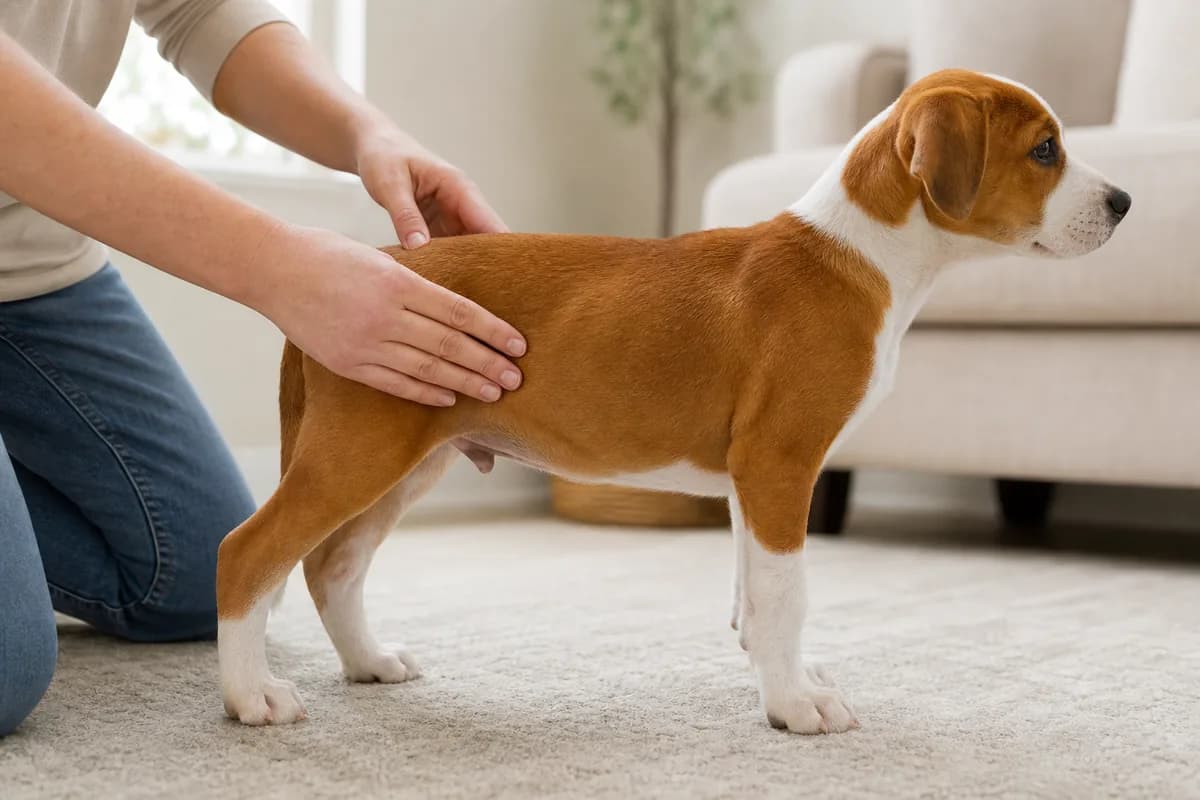
Check a puppy's body condition by feeling the ribs with flat fingertips, looking for a waist from above, and checking for an abdominal tuck from the side. Ribs should be easy to feel beneath a light cover without protruding sharply. Repeat the same three checks monthly and interpret them alongside the puppy's growth curve.
Why weigh-in numbers are not enough
A scale tells you total mass. It cannot tell you how much is growing tissue, fat, food, or fluid. Body condition score adds a repeatable hands-on assessment of fat cover using the ribs, waist, and abdominal tuck.
WSAVA publishes nine-point dog body condition charts in which 4 to 5 out of 9 is the ideal range (WSAVA nutrition toolkit). The system applies to puppies too, but growth makes the trend especially important.
How do I check a puppy in three steps?
1. Feel the ribs
Place flat fingertips over the rib cage and move them gently through the coat. At ideal condition, each rib is easy to identify beneath a light fat cover. If you must press firmly, the puppy may be carrying excess fat. If ribs and other bones project sharply with little cover, the puppy may be too thin.
2. Look from above
With the puppy standing naturally, look for a waist behind the ribs. It should be visible without creating an extreme hourglass. A fluffy coat can hide it, so use your hands to confirm the outline.
3. Look from the side
The belly should rise from the end of the rib cage toward the hind legs. A flat or hanging line can accompany excess condition; a very severe tuck together with prominent bones may signal low condition.
| Finding | Possible score direction | Next action |
|---|---|---|
| Ribs easy to feel, visible waist and tuck | Ideal range | Keep monitoring growth |
| Ribs harder to feel, waist fading | Moving above ideal | Audit portions and treats |
| Ribs sharply visible, marked waist and tuck | Moving below ideal | Recheck weight and discuss with the veterinarian |
How often should I score my puppy?
Check monthly and whenever the food amount, activity, health, or growth rate changes. Use the same position and record the score with weight. AAHA recommends regular nutritional assessment across life stages, including body condition and feeding history (AAHA nutrition guidelines).
An upward-crossing growth curve combined with ribs becoming harder to feel is more actionable than either clue alone. Research comparing growth standards with body condition supports the value of watching centile-channel changes (growth-pattern study).
When should I call the veterinarian?
Arrange a veterinary assessment for a persistent drop or rise in condition, especially with appetite change, vomiting, diarrhea, lethargy, pain, a swollen belly, poor coat, or a stalled growth curve. Do not try to correct a thin puppy with supplements or an overweight puppy with a severe calorie cut on your own.
Record weight and condition in the PawAI Puppy Plan, and use the puppy growth chart guide to see whether the two trends tell the same story.
Sources
Frequently asked questions
What body condition score should a puppy have?
On the WSAVA nine-point scale, 4 to 5 is generally the ideal range. Growing large-breed puppies are often managed toward the lean side of ideal, but your veterinarian should interpret the score with growth and health.
Can a fluffy puppy be scored accurately?
Yes, but touch matters more than appearance. Use flat fingertips to feel the ribs and spine, then part or compress the coat enough to judge the waist and belly line without relying on the silhouette alone.
Put this into practice
Check if your dog is overweight from a photo →Curious how the numbers work? See how we calculate.
This article is educational and is not veterinary advice. For a diagnosis or a treatment plan, consult a licensed veterinarian who can examine your pet.