
Puppy Socialization Checklist: 8 to 16 Weeks
Socialization from 8 to 16 weeks should create safe, positive experiences—not force a puppy through a long checklist. Introduce people, sounds, surfaces, handling, travel, and healthy animals at the puppy's pace. Pair novelty with food or play, keep sessions short, and add distance whenever the puppy freezes, hides, or refuses rewards.
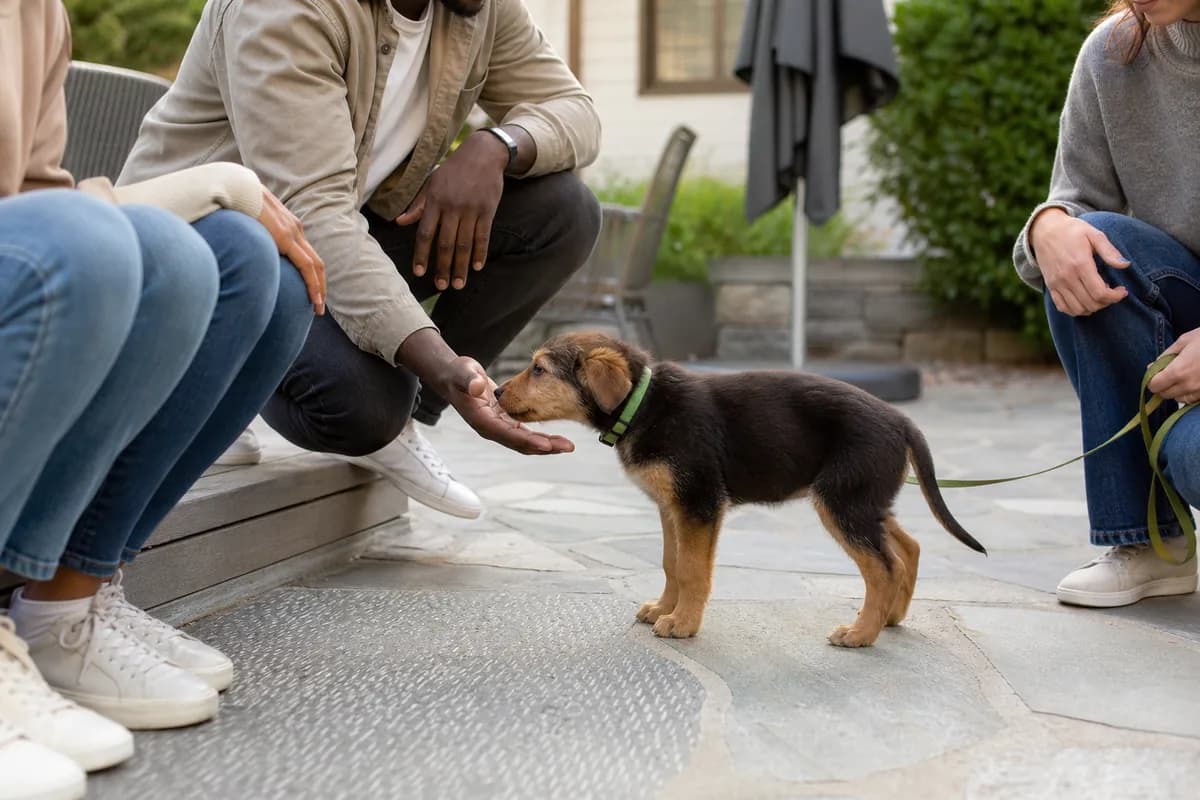
What counts as puppy socialization?
Socialization is the process of learning that ordinary parts of life are safe. It includes more than meeting dogs. People of different ages and appearances, household sounds, traffic at a distance, surfaces, handling, car travel, being alone briefly, and settling quietly all belong in the plan.
AVSAB identifies the first three months as the most important socialization period and supports safe exposure before the full puppy vaccine series is complete when disease precautions are in place (AVSAB statement). Your veterinarian should tailor those precautions to local parvovirus risk and your puppy's health.
Week-by-week socialization checklist
The ages below are a planning sequence, not a deadline. Start wherever your puppy is comfortable and repeat easy experiences between new ones.
| Age | Gentle focus | Example experiences |
|---|---|---|
| 8–9 weeks | Home, trust, and recovery | Household sounds at low volume, two floor surfaces, collar touch, naps alone in a safe pen |
| 9–10 weeks | People and handling | Calm adults, hats, mobility aids at a distance, paws and ears touched briefly for a reward |
| 10–11 weeks | Movement and travel | Short car rides, carried observation near traffic, elevator or automatic door from a comfortable distance |
| 11–12 weeks | Safe animals and class skills | Healthy vaccinated dogs you know, a well-managed puppy class, name response around mild distraction |
| 12–14 weeks | Places and practical care | Veterinary lobby happy visit, grooming tools, quiet store exterior, different safe surfaces |
| 14–16 weeks | Variety and calm independence | New routes, visitors, brief alone time, settling while ordinary life happens |
Aim for quality, choice, and recovery, not a high count. One calm encounter that ends while the puppy still feels safe is more valuable than ten overwhelming introductions.
How do I know whether an exposure is positive?
A comfortable puppy can eat, play, sniff, look away, and choose to approach or leave. A worried puppy may freeze, crouch, tuck the tail, hide, scan constantly, pant when not hot, or stop taking food. Those signals mean the experience is too close, loud, fast, or long.
Move away until the puppy can function normally again. Do not lure a frightened puppy closer and do not punish a retreat. AVSAB recommends reward-based methods and advises against aversive tools or physical and psychological punishment (humane training statement).
How can I balance disease safety with behavior needs?
Avoid dog parks, pet-relief areas, and other heavily trafficked ground used by dogs of unknown health status. Choose disinfectable puppy-class surfaces, controlled meetings with healthy vaccinated dogs, observation from a clean mat or carrier, and car rides that do not require ground contact. Keep vaccinations and parasite prevention current under your veterinarian's plan.
AAHA treats social development, nutrition, preventive care, and behavior as connected puppy priorities (AAHA puppy life stage). That is why a good plan protects against both infectious disease and preventable fear.
Track one small socialization action each day in the PawAI Puppy Plan. Keep notes on what the puppy saw, the distance, and whether the puppy could eat and recover; that record is more useful than a box marked “done.” Coordinate rewards with the puppy treat calorie guide so frequent positive exposures still fit the daily food plan.
Sources
Frequently asked questions
Can my puppy socialize before all vaccinations are finished?
Often yes, with a veterinarian-guided risk plan. Well-run puppy classes and controlled meetings with healthy vaccinated dogs are different from dog parks or heavily used areas with unknown animals. Ask your veterinarian about local disease risk.
What if my puppy is afraid during socialization?
Stop moving closer. Create distance, lower the intensity, and let the puppy choose whether to approach. Persistent or intense fear deserves early guidance from your veterinarian or a qualified reward-based behavior professional.
Put this into practice
Check if your dog is overweight from a photo →Curious how the numbers work? See how we calculate.
This article is educational and is not veterinary advice. For a diagnosis or a treatment plan, consult a licensed veterinarian who can examine your pet.