
Senior Dog Gaining Weight? Causes and What to Do
Senior dogs gain weight mainly because activity and metabolism drop while the portion stays the same, so the old amount now overfeeds. Less common causes include hypothyroidism and fluid from heart disease. The fix is to recalculate calories for the lower requirement, keep protein high to protect muscle, and have a vet rule out disease if gain is sudden.
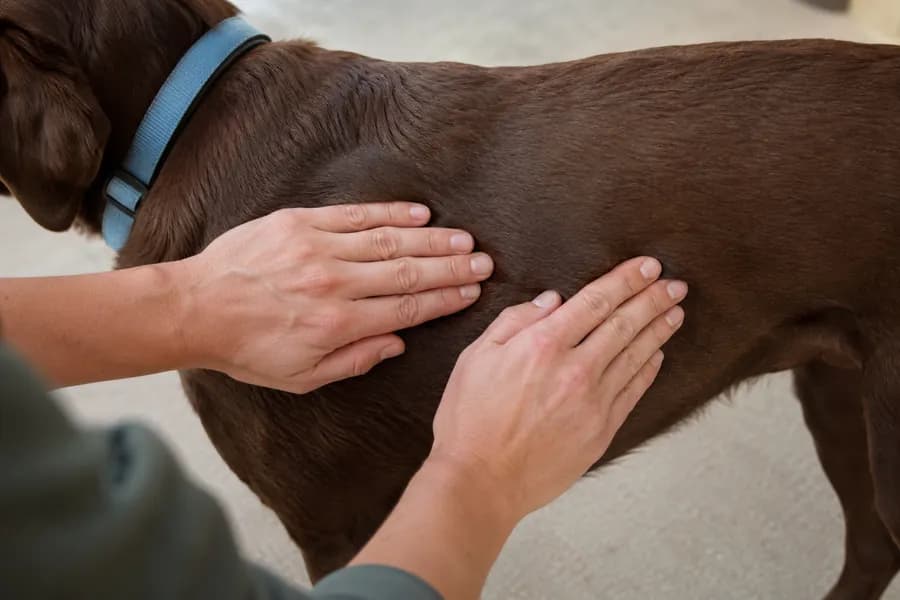
Why is my senior dog gaining weight?
Most of the time, the arithmetic simply changed. As dogs age they move less and their resting metabolism slows, so the portion that maintained weight at age five now delivers more calories than a ten-year-old burns. Nothing about the food changed; the dog's requirement fell and the bowl didn't. This is the leading cause of middle-age and senior weight gain, and it is very common — in 2022, 59% of U.S. dogs were overweight or obese (APOP 2022), with older dogs heavily represented.
Weight matters more, not less, in a senior. Extra load worsens arthritis, which most older dogs already have, and shortens the comfortable, mobile years.
When is weight gain a medical sign?
Sometimes the cause isn't just calories. Watch for these:
- Hypothyroidism. An underactive thyroid lowers metabolism and causes weight gain, often with a dull coat, skin changes, and lethargy. It is diagnosed with a blood test and treated with a daily tablet.
- Fluid, not fat. A belly that enlarges while the ribs and spine feel bony can be fluid accumulation from heart, liver, or other disease — the opposite of a feeding problem, and a reason to see a vet soon.
- Reduced mobility from pain. Arthritis makes a dog move less, which adds weight, which loads the joints more — a loop worth breaking early.
If weight gain is sudden, or paired with the signs above, book a vet visit before changing the diet.
How should I feed an overweight senior dog?
Recalculate, then protect muscle. Estimate resting needs from ideal weight — RER = 70 × (kg)^0.75 — and set a modest deficit (WSAVA energy chart). Cut calories through portion and fat, and keep protein adequate to high, because older dogs lose muscle more easily and muscle is what keeps them mobile.
| Lever | Senior-specific guidance |
|---|---|
| Calorie target | Recalculate for lower activity; aim 1–2% weight loss/week |
| Protein | Keep adequate/high to preserve muscle (if kidneys are healthy) |
| Treats | Under 10% of calories; use for meds and bonding |
| Exercise | Low-impact and frequent — short walks, swimming |
| Recheck | Body condition monthly; vet if anything is sudden |
Go gently on the pace. A safe loss is still 1–2% of body weight per week, and in practice most owners under-restrict rather than over-restrict — 64.4% of dogs in one program missed even that modest target (canine weight-loss review, PMC).
Next steps
Check your senior's condition with our body condition check, get an age-appropriate calorie target from the dog calorie calculator, and pace it with how much weight a dog should lose per week.
Sources
Frequently asked questions
Should senior dogs eat less protein?
Usually the opposite. Healthy older dogs benefit from adequate or higher protein to preserve muscle, as long as kidneys are healthy. Cut calories through fat and portion, not protein.
Is a swollen belly in an old dog just fat?
Not necessarily. A rounder abdomen can be fluid from heart or liver disease rather than fat. If the belly enlarges but the ribs and spine feel bony, see a vet promptly.
Put this into practice
Check if your dog is overweight from a photo →Curious how the numbers work? See how we calculate.
This article is educational and is not veterinary advice. For a diagnosis or a treatment plan, consult a licensed veterinarian who can examine your pet.