
Body Condition Score vs Weight: Which One Matters?
Weight tells you how heavy your dog is; body condition score tells you how much of that weight is fat. Two dogs of the same breed and weight can be lean or overweight, so the scale alone can mislead. Body condition score, a hands-on nine-point scale, is the better day-to-day gauge, with the scale used to track change over time.
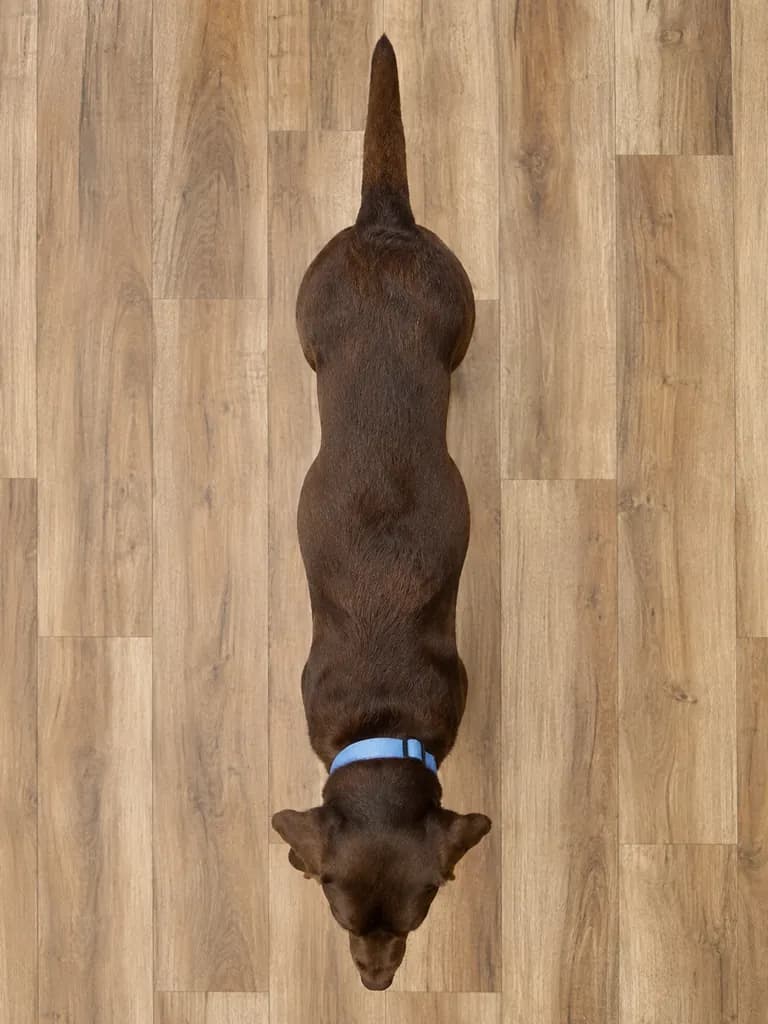
What's the difference between body condition score and weight?
Weight is a single number on a scale. It is objective and easy to track, but on its own it cannot tell you whether your dog is carrying muscle or fat, or where an individual dog's healthy weight sits. "Ideal weight" for a 25-pound Beagle is a range, not a point, and it differs between two 25-pound Beagles.
Body condition score (BCS) answers the question weight can't: how much fat is on this dog right now. It is a hands-on assessment of three things — how easily you feel the ribs, whether there is a waist behind the ribs from above, and whether the belly tucks up from the side. WSAVA publishes the standard dog and cat charts used in clinics worldwide (WSAVA Global Nutrition Guidelines).
Why is body condition score better than the scale?
Because it measures the thing you actually care about. The scale tells you a dog got heavier; BCS tells you whether that change is fat you should trim or muscle you should keep. On the most common nine-point scale, 4–5 out of 9 is ideal; each point above ideal corresponds to being roughly 10–15% over ideal body weight.
That translation is what makes BCS actionable. In dogs, overweight is defined as ≥15% above ideal weight and obese as >30% above (canine weight-loss review, PMC) — which maps directly onto BCS points. So a BCS of 7/9 isn't a vague label; it implies your dog is around 20–30% over ideal and gives you a weight-loss target.
| Body condition (9-point) | What you feel and see | Rough % over/under ideal |
|---|---|---|
| 3/9 (underweight) | Ribs, spine, hips obvious; no fat | ~10% under |
| 4–5/9 (ideal) | Ribs easily felt; visible waist and tuck | At ideal |
| 6/9 (overweight) | Ribs harder to feel; waist fading | ~10% over |
| 7/9 | Ribs hard to feel; no waist | ~20% over |
| 8–9/9 (obese) | Ribs buried; belly distended | ~30%+ over |
How do I use both together?
Use BCS to judge and the scale to track. Score your dog's condition first to set the goal — say, moving from 7/9 to 5/9. Then convert that to a target weight and use the scale to monitor progress week to week, because a good scale detects smaller changes than your hands can feel. The two are partners: condition sets the destination, weight measures the trip.
This matters because the destination is easy to miss. In 2022, 59% of U.S. dogs were overweight or obese (APOP 2022), and most of those owners believed their dog was normal. A number on a scale rarely changes that belief; feeling for absent ribs does.
Putting it into practice
Score your dog today with our body condition check, which walks the rib, waist, and tuck test from a photo, then set a calorie target with the dog calorie calculator. If your dog scores above ideal, read how to tell if your dog is overweight for the full hands-on method, and understanding the dog body condition score chart to read each point on the scale.
Sources
Frequently asked questions
Can two dogs weigh the same but have different body condition?
Yes. Muscle and fat weigh differently on the same frame, and ideal weight varies within a breed. That is exactly why body condition score, not weight alone, is the better fitness gauge.
Is body condition score subjective?
It is a structured assessment of ribs, waist, and abdominal tuck on a defined scale, so trained observers agree closely. It is far more informative than the scale for judging fat.
Put this into practice
Check if your dog is overweight from a photo →Curious how the numbers work? See how we calculate.
This article is educational and is not veterinary advice. For a diagnosis or a treatment plan, consult a licensed veterinarian who can examine your pet.