
How to Tell If Your Dog Is Overweight (At Home)
You can tell at home with three checks. Feel for the ribs, which should be easy to find under a thin fat layer. Look from above for a waist behind the ribs. Look from the side for a belly that tucks up. If the ribs are hard to find and the waist is gone, your dog is overweight.
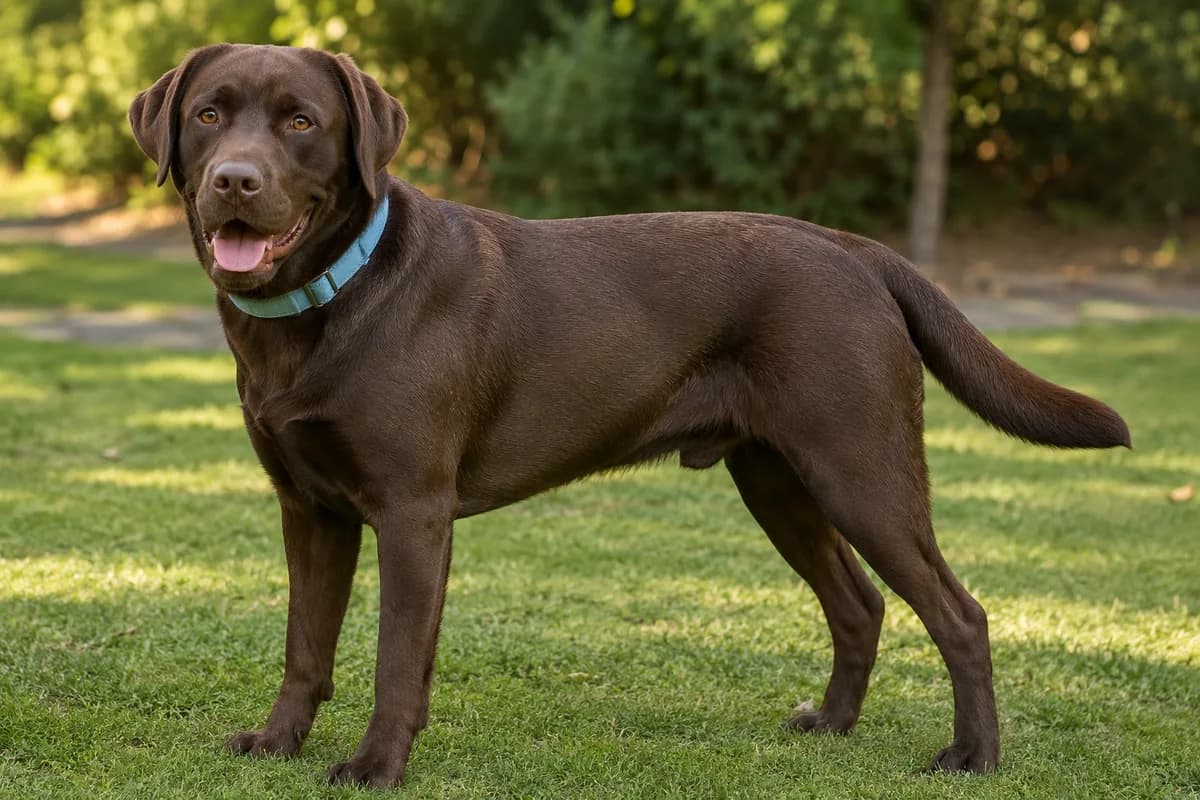
How can I tell if my dog is overweight without a vet?
Use your hands, not your eyes. Owners are poor judges of their own dog by sight because an overweight dog now looks normal — in 2022, 59% of U.S. dogs were overweight or obese (APOP 2022), so a rounded dog is simply what most people are used to seeing. Three physical checks cut through that.
The three checks
1. The rib check. Run your fingertips across your dog's side, over the ribs. At an ideal weight you should feel each rib easily under a thin layer of fat, with light pressure — similar to feeling the back of your hand. If you have to press to find ribs, or can't find them, there is too much fat. If they stick out sharply with no cover, your dog is too thin.
2. The waist check (from above). Stand over your standing dog and look down. You want to see the body narrow behind the ribs into a visible waist. A straight or bulging outline with no narrowing means overweight.
3. The tuck check (from the side). Look at your dog from the side at their level. The belly should rise up from the bottom of the ribcage toward the hind legs — an abdominal tuck. A belly that hangs level with the ribs, or sags below, signals excess fat.
These three map onto the WSAVA nine-point body condition score used in clinics (WSAVA Global Nutrition Guidelines), where 4–5 out of 9 is ideal.
| Check | Ideal (BCS 4–5/9) | Overweight (BCS 6–9/9) |
|---|---|---|
| Ribs | Felt easily under thin fat | Hard to feel or buried |
| Waist (above) | Clear narrowing behind ribs | Little or none; straight sides |
| Tuck (side) | Belly tucks up toward hind legs | Belly level or hanging down |
How overweight is my dog, in numbers?
Each point above ideal on the nine-point scale is roughly 10–15% over ideal weight. Formally, dogs are overweight at ≥15% above ideal and obese at >30% above (canine weight-loss review, PMC). So a dog you'd score at 7/9 is carrying about 20% extra — for a dog whose ideal is 50 lb, that's around 10 unnecessary pounds.
What should I do next?
If your dog fails one or more checks, set a target and start a measured, gradual reduction rather than crash dieting. Confirm your read with our body condition check from a photo, get a starting calorie target from the dog calorie calculator, and plan the pace with how much weight a dog should lose per week. If you want to understand what "the number matters less than the condition" really means, read body condition score vs weight.
Sources
Frequently asked questions
My dog looks fine but the vet says overweight. Who is right?
Probably the vet. Overweight looks normal to owners because it is now the norm. Trust the hands-on rib and waist check over your eyes and over the number on the scale.
Can I tell if a fluffy dog is overweight?
Coat hides shape, so rely on touch, not sight. Feel through the fur for ribs and waist rather than judging by the outline.
Put this into practice
Check if your dog is overweight from a photo →Curious how the numbers work? See how we calculate.
This article is educational and is not veterinary advice. For a diagnosis or a treatment plan, consult a licensed veterinarian who can examine your pet.