
Understanding the Dog Body Condition Score Chart
The dog body condition score chart rates fat on a nine-point scale, where 4 to 5 is ideal, below 4 is too thin, and 6 and up is overweight. Each point above ideal is roughly 10 to 15 percent over ideal weight. You score it by feeling ribs and checking the waist and belly tuck.
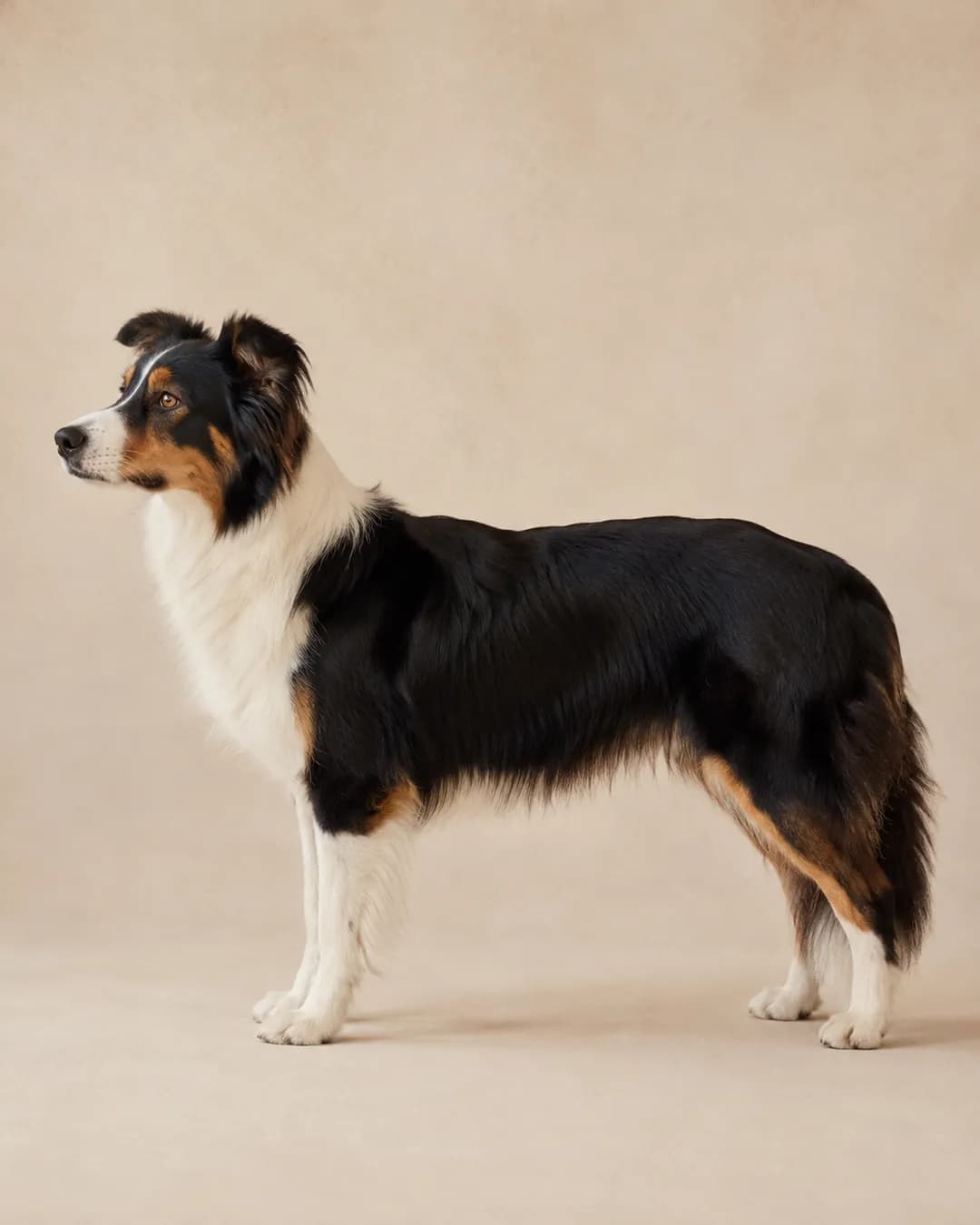
What is the dog body condition score chart?
It's a standardized way to rate how much fat a dog is carrying, independent of breed or the number on the scale. The most widely used version is a nine-point scale, published by WSAVA as a dog chart used in clinics worldwide (WSAVA Global Nutrition Guidelines). It scores three things you can assess by hand and eye: how easily you feel the ribs, whether there's a waist behind the ribs from above, and whether the belly tucks up from the side.
Ideal is 4 to 5 out of 9. Below that a dog is too thin; above it, overweight to obese.
What does each score mean?
| Score | Category | What you feel and see |
|---|---|---|
| 1–3/9 | Too thin | Ribs, spine, hips visible; little or no fat; obvious waist and tuck |
| 4/9 | Ideal (lean) | Ribs easily felt with minimal fat; clear waist and tuck |
| 5/9 | Ideal | Ribs easily felt; waist visible from above; belly tucked |
| 6/9 | Overweight | Ribs felt with slight excess fat; waist starting to disappear |
| 7/9 | Overweight | Ribs hard to feel under fat; waist barely visible; little tuck |
| 8–9/9 | Obese | Ribs cannot be felt; no waist; belly distended, fat deposits |
How do BCS points translate into weight?
Each point above ideal is roughly 10 to 15 percent over ideal body weight. That maps onto the clinical definitions: overweight is ≥15% above ideal and obese is >30% above (canine weight-loss review, PMC). So a dog you score at 7/9 is carrying about 20% extra — concrete enough to set a target weight from.
This is why the chart beats the scale for judgment: it converts a vague worry into a number and a goal. And the goal is widely missed — in 2022, 59% of U.S. dogs were overweight or obese (APOP 2022), most of them scoring 6/9 or higher while their owners saw a normal dog.
How do I score my own dog?
Run the three checks in order — ribs, then waist from above, then tuck from the side — and match what you find to the table. Do it by touch, not sight, especially on fluffy dogs. Re-score monthly; a rising score is your earliest warning, well before the scale alarms you.
Turn your score into a plan
Get an objective read with our body condition check from a photo, then, if your dog scores above 5, set a calorie target with the dog calorie calculator and pace the loss using how much weight a dog should lose per week. For why condition beats the scale, read body condition score vs weight.
Sources
Frequently asked questions
What body condition score should my dog be?
Aim for 4 to 5 out of 9. At that score you can easily feel the ribs, see a waist from above, and see a belly tuck from the side.
Is there a 5-point body condition scale too?
Yes. Some charts use a 5-point scale where 3 is ideal. The 9-point scale is more common in guidelines and gives finer resolution, but both assess the same rib, waist, and tuck features.
Put this into practice
Check if your dog is overweight from a photo →Curious how the numbers work? See how we calculate.
This article is educational and is not veterinary advice. For a diagnosis or a treatment plan, consult a licensed veterinarian who can examine your pet.