
Large-Breed Puppy Nutrition Without the Guesswork
Feed a large-breed puppy a complete and balanced growth food whose adequacy statement includes growth of large-size dogs, meaning dogs expected to reach at least 70 pounds as adults. Portion it to maintain steady, lean growth. Do not add calcium or mineral supplements unless your veterinarian prescribed them, because excesses can disrupt skeletal development.
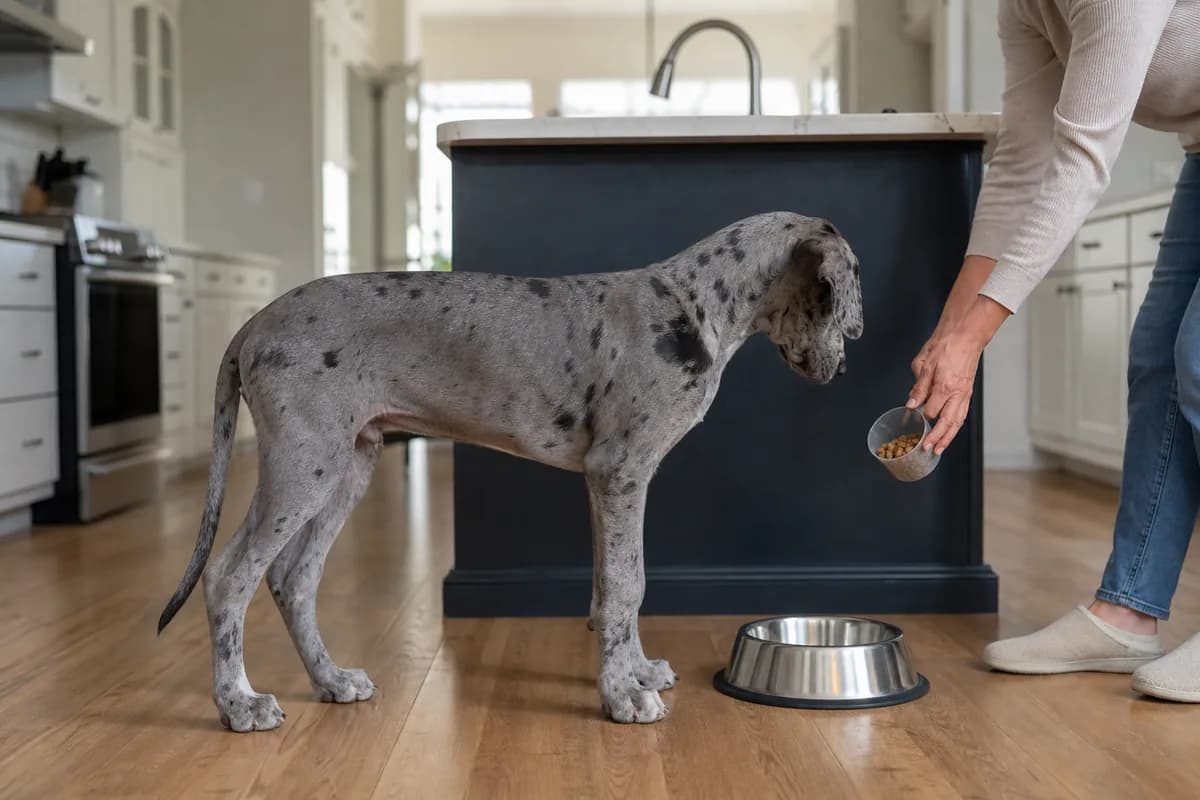
What makes large-breed puppy food different?
Large and giant puppies have less room for nutritional error during rapid skeletal growth. The aim is not to make the dog smaller; it is to avoid supplying energy and minerals faster than the developing skeleton can use them.
In the United States, start with the nutritional adequacy statement. For a puppy expected to reach 70 pounds or more as an adult, look for a complete-and- balanced growth claim that explicitly includes growth of large-size dogs. The FDA explains that complete-and-balanced claims rely on an AAFCO nutrient profile or an AAFCO feeding-test protocol for the stated life stage (FDA pet food guidance).
Which nutrition mistakes matter most?
Feeding for the fastest possible growth
Free-choice feeding and oversized portions can push energy intake above need. Research reviews connect excess energy during growth with obesity and increased risk around developmental orthopedic disease, especially in genetically susceptible large breeds (large-breed puppy nutrition review).
Feed measured meals and use the package guide as a starting hypothesis. Adjust it against the puppy's growth trajectory and body condition, not appetite alone.
Adding calcium “for strong bones”
More calcium does not build a better skeleton. A properly formulated large-breed growth food already controls calcium and its relationship with other minerals. Avoid calcium powder, bone meal, and broad mineral supplements unless your veterinarian has diagnosed a need and designed the correction.
Treating a round puppy as a healthy puppy
You should be able to feel ribs easily under a light cover and see a waist. AAHA notes that some large and giant dogs do not reach skeletal maturity until roughly 15–16 months and emphasizes lean body condition and avoidance of excessive calcium through growth (AAHA life-stage diets).
A practical feeding routine
- Confirm the formal large-size growth adequacy statement.
- Record calories per cup or can and measure the whole daily ration.
- Split the ration into age-appropriate meals instead of keeping the bowl full.
- Reserve some kibble for training and keep other treats under 10% of calories.
- Weigh weekly during rapid growth and check body condition with your hands.
- Review the curve and food amount at every puppy veterinary visit.
| Signal | First check |
|---|---|
| Ribs getting harder to feel | Treats, measuring method, and total daily calories |
| Rapid upward change on growth chart | Portion trend and body condition |
| Poor appetite or falling curve | Health, digestion, and veterinary assessment |
| Limb pain, lameness, or reluctance to move | Prompt veterinary examination, not a supplement |
How does PawAI help without replacing the veterinarian?
The PawAI Puppy Plan turns age, weight, food calories, and activity into a starting daily portion and growth record. It cannot diagnose skeletal disease or determine a medical diet. Use the record to make veterinary conversations more specific.
For the label check, read how to read a puppy food label in the US. For the trend, use the puppy growth chart guide.
Sources
Frequently asked questions
Does my large-breed puppy need a calcium supplement?
Not when a complete and balanced large-size growth diet is fed as directed. Add calcium or other minerals only when the veterinarian managing your puppy identifies a specific reason and gives an exact plan.
Should a large-breed puppy grow as fast as possible?
No. The goal is the puppy's genetically appropriate adult size reached through controlled, lean growth. Extra calories can accelerate weight gain without creating a healthier adult frame.
Put this into practice
Calculate your pet’s daily calories →Curious how the numbers work? See how we calculate.
This article is educational and is not veterinary advice. For a diagnosis or a treatment plan, consult a licensed veterinarian who can examine your pet.