
Your Puppy’s First Vet Visit: A Practical Checklist
For your puppy's first veterinary visit, bring every breeder, shelter, vaccine, deworming, and microchip record; the food label and daily amount; a fresh stool sample if the clinic requests one; and a list of questions. Transport the puppy securely, bring tiny rewards, and let the veterinary team create the individual preventive-care schedule.
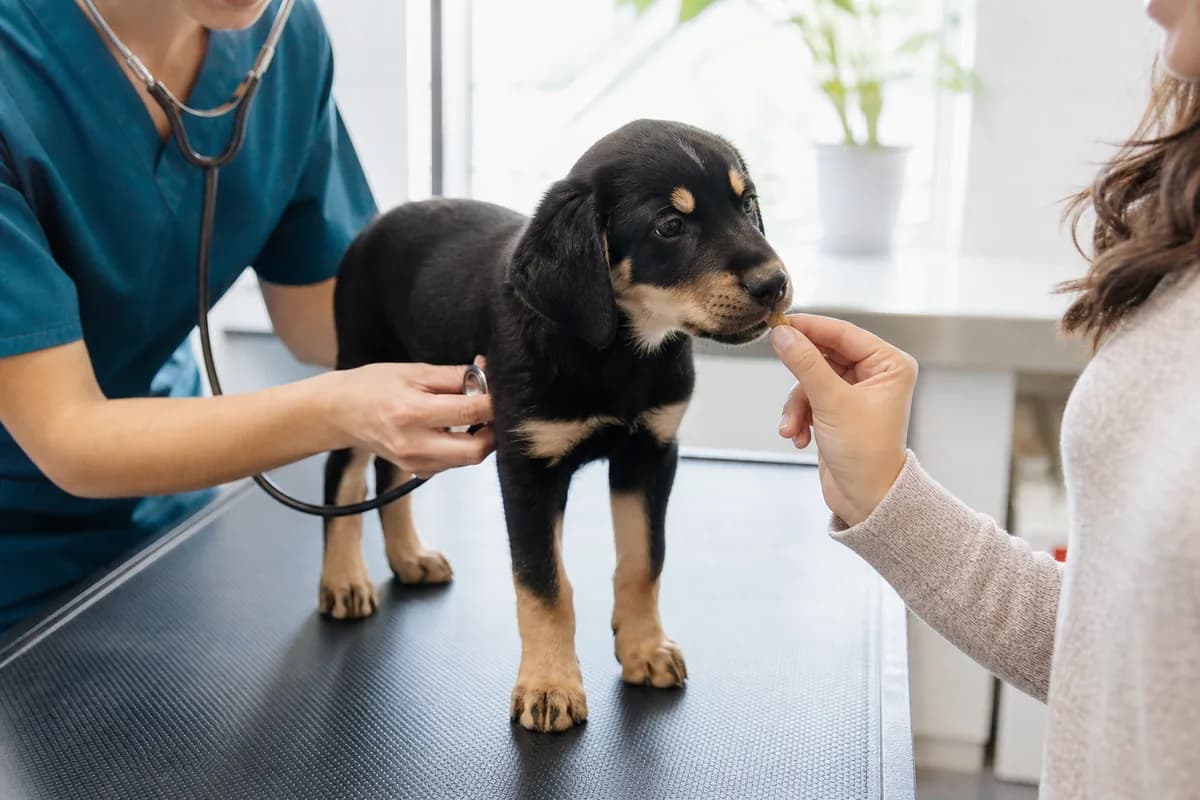
What should I bring to the first puppy appointment?
Put the information in one folder before the puppy comes home. A complete record helps the clinic distinguish documented care from dates that still need confirmation.
| Bring | Why it helps |
|---|---|
| Breeder, rescue, or shelter records | Shows dates, products, exams, and prior treatment |
| Vaccine and deworming documentation | Lets the veterinarian build the next steps from verified history |
| Microchip number and registration status | Confirms identification and ownership details |
| Food package or label photos | Shows life-stage claim, calories, ingredients, and lot code |
| Daily food and treat amounts | Makes the nutrition history measurable |
| Medication and supplement list | Prevents omissions and duplicate ingredients |
| Fresh stool sample, if requested | Supports the clinic's parasite-testing plan |
| Written questions and observations | Keeps priorities from being lost during the visit |
Call ahead about the stool sample, clinic entry procedure, and whether paperwork can be sent securely before the appointment.
What information should I record at home first?
Write down appetite, stool, vomiting, coughing, scratching, sleep, drinking, urination, activity, and any behavior that concerns you. Note when the puppy arrived, where the puppy came from, contact with other animals, travel, and which areas the puppy has visited.
AAHA's puppy guidance treats nutrition, behavior, infectious and parasite exposure, dental development, safety, and preventive care as connected parts of the same life stage (AAHA puppy guidance).
How can I make the visit less stressful?
Use a secure carrier or correctly fitted vehicle restraint. Bring a non-slip mat or familiar towel and tiny food rewards if the clinic says feeding is appropriate. Allow extra time so arrival is not rushed. Keep distance from unfamiliar animals in the lobby and do not place a young puppy on communal ground unless the clinic directs you.
At home, briefly pair gentle touches to paws, ears, and body with food or play. Stop before the puppy struggles. AVSAB's position-statement library includes guidance on positive veterinary interactions and reward-based handling (AVSAB resources).
Which questions are worth writing down?
- What preventive-care dates should go on the calendar, and why?
- Which local environments should the puppy avoid for now?
- Is the current food appropriate for expected adult size and growth?
- What weight and body-condition trend should we monitor?
- Which parasite risks apply to our home, travel, and region?
- What normal behavior should we expect at this age?
- Who should we contact after hours, and which signs are urgent?
The AAHA life-stage checklist gives veterinary teams a structured set of puppy topics, including exposure risk, socialization, nutrition, feeding schedule, and parasite screening (AAHA checklist). Your clinic decides which actions apply to the individual puppy.
What should I save after the appointment?
Keep the visit summary, measured weight, body-condition score, product names, dates, next appointment, and the clinic's contact instructions. Enter only the development and feeding tasks into the PawAI Puppy Plan; keep the medical schedule exactly as the clinic issued it.
For safe exposure planning, continue with the 8-to-16-week socialization checklist. For the nutrition information to photograph, use the US puppy-food label guide.
Sources
Frequently asked questions
When should I book my puppy's first veterinary visit?
Contact a clinic as soon as the puppy is coming home and follow its timing advice. Existing records, age, source, health, and local disease risk affect how quickly the puppy should be examined.
Should I bring my puppy's food bag to the appointment?
Bring the package or clear photos of the front, nutritional adequacy statement, calorie content, ingredient panel, lot code, and feeding guide, plus the actual amount fed each day and all treats or supplements.
Put this into practice
Check if your dog is overweight from a photo →Curious how the numbers work? See how we calculate.
This article is educational and is not veterinary advice. For a diagnosis or a treatment plan, consult a licensed veterinarian who can examine your pet.